Kamis, 25 Desember 2025

Why We Get Mentally Tired Even When We Don’t Do Physical Work

 Have you ever felt tired even though you weren’t doing anything? Just lying on your bed all day, but somehow you still feel exhausted afterward.

If your answer is yes, then we are on the same page.

That’s exactly how I feel these days. I often feel exhausted even when I’m not doing anything in particular. The reason for this is something called mental exhaustion.

Let me break this down for you. The brain is one of the most important organs in our body. It needs to stay active all the time. Whether we are working, studying, or even sleeping, our brain works 24/7 to make sure our body functions properly. Moreover, the brain consumes a lot of energy compared to other organs. That’s why, even if you don’t do any physical activity during the day, you can still feel tired—because your brain never really stops working.

I’m sure you’ve experienced moments when your body is resting, but your mind keeps thinking. This is called overthinking. You think about the same problems again and again, and it feels almost impossible to stop. Our brain becomes overloaded with information and is forced to process similar thoughts repeatedly, creating a never-ending cycle.

On top of that, we also make many decisions every day. We decide what to wear, what to bring to a party, what to eat for lunch, and many of us have jobs that require constant decision-making. As a result, our brain keeps working without having enough time to rest.

Now that we understand the reasons, let’s move on to the next step.

How can we rest our brain for a moment?

Here are some simple tips:

1. Reduce information intake

In this social media era, we are constantly bombarded with unnecessary information. When we scroll through TikTok or watch random videos on YouTube, our brain becomes overwhelmed. Try to reduce your information intake. For example, put your phone away in a drawer or set a screen-time limit. Reducing information overload is the first step to resting your brain.

2. Do one thing at a time

Multitasking is very exhausting. Our brain is not designed to handle many problems at the same time. Try breaking your tasks into smaller parts or make a to-do list. In my opinion, simplifying your tasks can make your life feel much more manageable.

3. Move your body gently

As I mentioned before, mental exhaustion happens when our brain is constantly thinking while our body stays inactive. Many jobs force us into a sedentary lifestyle. Try moving your body a little—take a short walk, stretch, or take a deep breath. I can guarantee it will help you feel better.

4. Let your mind wander

Mind wandering is not a crime. It’s very normal and very human. However, we often think that activities like daydreaming are unproductive. Instead of fighting it, try embracing the moment and letting your mind rest.

5. Get enough quality sleep

People often underestimate the importance of sleep. We pay attention to our diet and exercise routine, but rarely ask about sleep quality. Good sleep improves mood, focus, and productivity. That’s why we need to take our sleep schedule more seriously.

Minggu, 08 September 2013

Depression

  Depression is a condition someone with low mood. Usually people with depression will avoid to do some activity, even for fun activity. Depression will affect the thoughts, behaviour, feeling and sense of well being. People with depression will feel empty, anxious, hopeless and worried. Some of them will lose the appetite, but some of them will do the opposite, they will overeat. They have problem with concentrating, remembering details, or making decision.

  There are alot of thing that considered to be the cause of depression. Life events, especially sad life events will make the depressed mood precipitate. Childbirth, manopause, job problem, financial crisis, losed of a loved one are some life events that very common in depressed people. Medical treatments is also some factor of depression, for example, hepatitis C drug therapy, beta blokers, or some lifelong treatment.


  Treatment for depression can be with drugs or non drugs therapy. For non drugs therapy you can use some psychotherapy like Cognitive Based Therapy (CBT), Intrapersonal Therapy (IPT), or Psychoanalysis. For drug therapy you can use Tricyclic based drug like amytriptiline, or SSRI (Selective Serotonine Reuptake Inhibitor). 

Rabu, 22 Agustus 2012

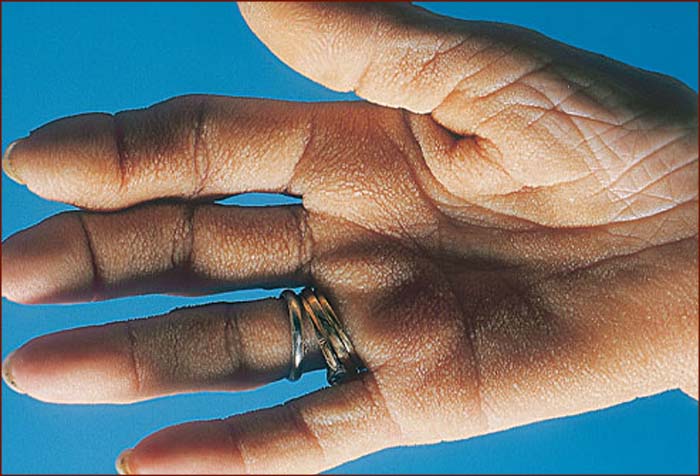
Lung Cancer and Skin


lung cancer skin

Lung cancer is a type of cancer often results in death. The prognosis of lung cancer is extremely low at only 5 years old. The incidence of lung cancer decreased in men but increased in women. Lung cancer often appears at age 55 to 65 years. This type of cancer is often experienced metastasis. Lung cancer often metastasizes to the adrenal glands, liver, brain, and bone. Lung cancer metastasis to the skin is rare but is one factor to be aware of.

Lung cancer has a wide range of symptoms. Common symptoms may include fatigue and weight loss. When lung cancer metastasizes, the symptoms of lung cancer invasion will also be visible. This process may result in some changes in the skin surface.

Paraneoplastic Pemphigus
This phenomenon is the dryness of the skin and mucosa. One of the most evident is in the mouth and lips. These symptoms can occur also in lymphoma.

lung cancer skin

Carcinoid Syndrome
This syndrome causes the skin to turn red, pink, purple or blue. This color change occurs in the upper chest and face. The syndrome is associated with lung and colon cancer. Other symptoms that may occur include the diarrhea, difficulty breathing, rapid heart rate, and redness of the skin.

Acute Seborrheic Keratosis
These lesions are usually brown or black. These symptoms can appear very quickly and suddenly. Skin disorders are very common in older people but can be a sign of cancer. Usually these lesions are located on the chest, face, or back.

lung cancer skin
Dermatomyositis
This disorder most often occurs on the eyelids and hands. Inflammatory lesions are shown in the form of red and blue. This is caused by the inflammation that causes muscle weakness.

See also :

How to treat hantavirus pulmonary syndrome

Hantavirus Treatment
Hantavirus


Successful treatment of HPS (Hantavirus Pulmonary Syndrome) is determined by early treatment. Patients should be brought into the emergency room to get treatment as early as possible. Treatment in the hospital may be a provision of oxygen through an oxygen tank. Patients may also be given viral medication called ribavirin. Giving ribavirin may help reduce the risk of death.
hantavirus treatment

So far, no specific drug or vaccine that can tackle the disease Hantavirus Pulmonary Syndrome. Therefore, if you are in an area that has many rats you have to be vigilant. Symptoms of fever, muscle aches, and shortness of breath is an early sign to seek medical help. Do not forget to tell your doctor that you are around the house there are a lot of rats.

hantavirus treatment

Counseling and education about hantavirus disease should be conducted. Cooperation between residents with local health officials can prevent the spread of hantavirus disease. The disease is only transmitted between animals and man. This disease can not be transmitted between humans and humans. With good socialization, the tourists do not have to worry about hantavirus disease.

Archieve

get free traffic

EasyHits4U.com - Your Free Traffic Exchange - 1:1 Exchange Ratio, 5-Tier Referral Program. FREE Advertising!